Lamination: The Key to Flakiness
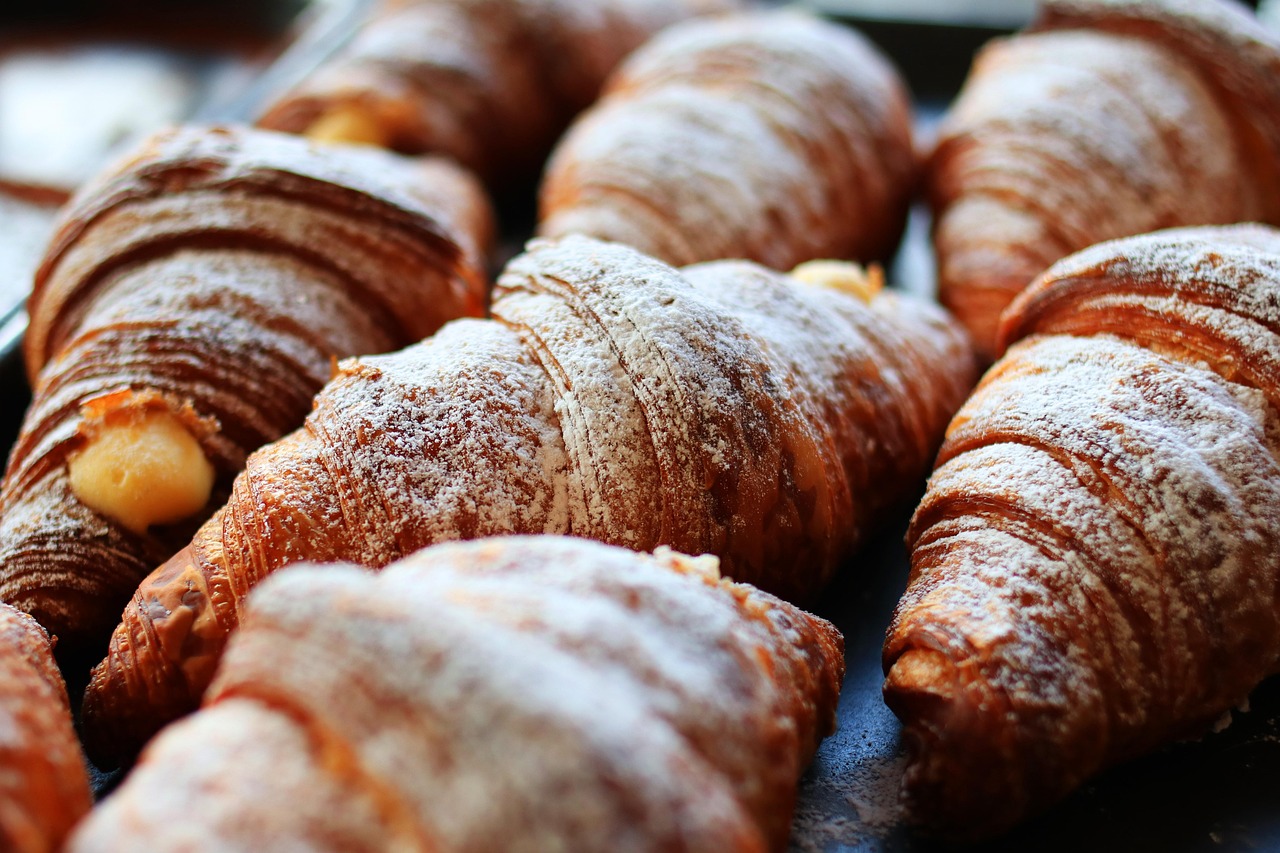
Pastry making is all about creating amazing textures, and the secret weapon is lamination. Lamination is the complex process of folding fat (usually cold butter) into dough multiple times to create hundreds of thin, alternating layers. The best example of this is a croissant. To make a croissant, you start with simple yeast dough, wrap it around a block of butter, and then roll and fold it (a "turn") typically three times. When this pastry is baked, the water in the butter turns to steam. This steam forces the thin layers of dough apart, creating that famous light, airy, and flaky interior structure that we all love. Because of the precision needed, working with laminated dough requires patience and, most importantly, keeping everything very cold. If the butter melts, the layers merge together, and you end up with heavy, bready pastry instead of light, flaky perfection. This is why many professional bakers refer to laminated dough as a true test of skill.
Beyond laminated dough, another classic pastry is choux pastry. Unlike croissants or puff pastry, choux is a cooked dough-you start by heating water, butter, and flour on the stovetop until it forms a ball. Eggs are then vigorously beaten into the mixture, which is what makes it unique. When piped and baked, the moisture in the dough rapidly turns to steam, causing the dough to puff up dramatically and leave a large, hollow center. This hollow center is what makes choux perfect for filling with cream to make éclairs or profiteroles. While puff pastry and croissants get their lift from physical layers of butter, choux gets its lift from the steam trapped inside the cooked batter. Understanding the difference between these pastry types is key to mastering the baking process. Pastries are delicate, requiring attention to detail, but the reward-a perfect, shatteringly crisp bite-is worth every moment spent in the kitchen.
Video: Mastering the Lamination Fold
Watch this quick tutorial to see how bakers create the crucial folds and turns for laminated dough to achieve the perfect flakiness.
Key Pastry Dough Types
| Dough Type | Defining Characteristic | Examples |
|---|---|---|
| Puff Pastry | High fat content, rolled and folded many times (no yeast). | Palmiers, Tarts, Turnovers |
| Croissant Dough | Laminated dough that includes yeast for a slightly bready texture. | Croissants, Pain au chocolat |
| Choux Pastry | Cooked dough (on stovetop) that puffs up from steam (no leavener). | Éclairs, Cream Puffs (Profiteroles) |
| Shortcrust Pastry | Crumbly, firm dough made by cutting fat into flour. | Pies, Quiche, Tarts |
Always use the coldest possible ingredients and surfaces when preparing laminated doughs to prevent the butter from melting.
For resources and tutorials on pastry techniques, check out these trusted sources:
King Arthur Baking: How to Make Puff Pastry
NYT Cooking: Guide to Choux Pastry
Simply Recipes: How to Make Shortcrust Pastry